Who Are Brand Advocates and Why Every Organization Needs Them

Forget the glossy-haired celebrity on a yacht. The most valuable brand advocate isn’t getting paid $10k per post; it’s your customer who’s actually putting your product to work and seeing results. The question is: who is that for you?
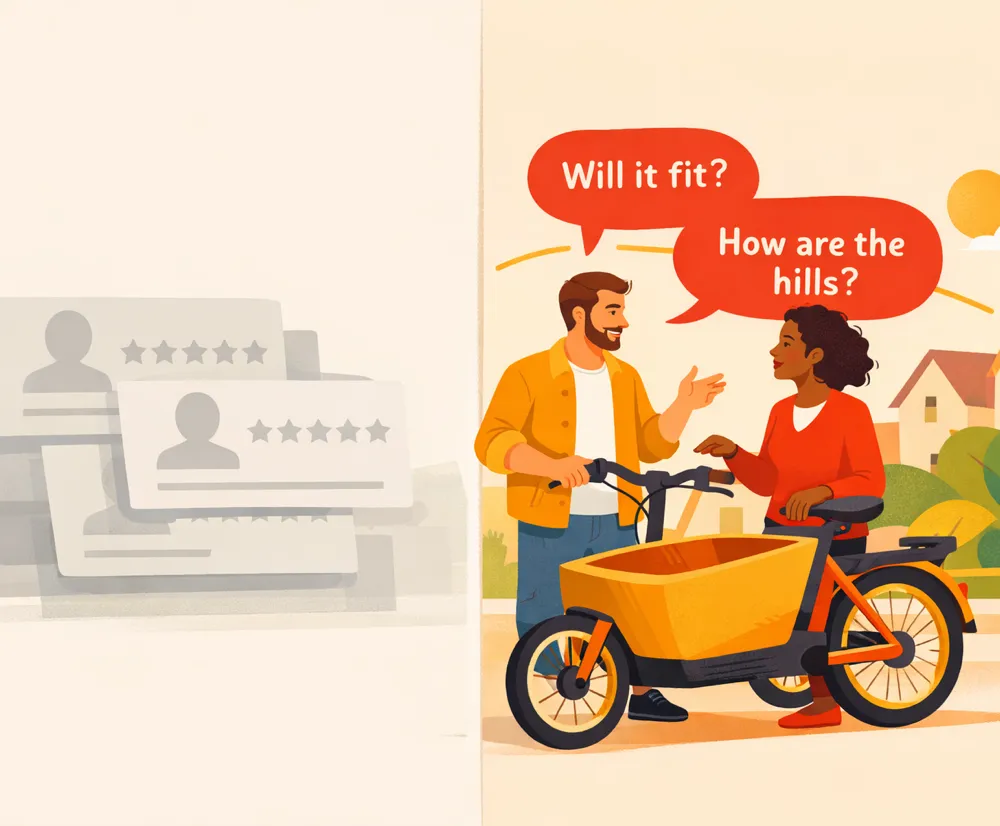
At Stoked, we see it every day: the most powerful marketing doesn’t come from a studio. It comes from a driveway, a park, a living room, or a backyard where a real owner is showing a curious neighbor how their gear actually works.
This isn’t just “marketing”, it’s brand advocacy in its purest form.
1. The Brand Advocate You Already Have (But Aren’t Using)
Let’s define our terms. A true brand advocate isn’t a scripted spokesperson or a micro-influencer looking for a freebie. They are a real, trusted peer, a satisfied customer, an enthusiast, or an early adopter who has integrated your product into their life.
The current state of social media marketing is crowded with manufactured “perfection.” Consumers are exhausted by it. We believe that real customers are the only authentic source of social proof left. You need to stop trying to manufacture trust and start trying to organize it. Because at the end of the day, real voices drive real conversion.
2. Redefining the Advocates : Real Owners vs. Paid Pros
There is a massive difference between someone paid to talk and someone who talks because they care.
- Brand Advocates : They are real owners with skin in the game. Their feedback is unscripted, highly specific, and irrefutably credible.
- Influencers: Content creators or celebrities who primarily leverage their audience for brand partnerships, usually with direct payment for posts or other forms of endorsement. Often they are given the product to make content. They drive brand awareness but often lack deep, daily product expertise.
- UGC Creators: Provide content for your media ads, but the interaction ends there.
- Affiliate Partners: Driven by a link; the focus is the transaction, not the transformation.
- Brand Ambassadors: Often confused with advocates, ambassadors typically represent brands more formally, often with formalized commission structures or sales targets. These may be customers but also may not.
Read the full breakdown of what truly sets brand ambassadors apart from brand advocates in our latest article.
Today’s buyers for premium D2C products, whether it’s a $4,000 cargo bike or high-end sports equipment, are looking for niche validation. A generic ad can’t tell them if a bike handles the specific hills in their neighborhood. A real owner can.
89% of consumers specifically trust personal recommendations over any other channel. In a noisy digital landscape where trust is scarce, this positions referral marketing as one of the most effective growth strategies. Peer recommendations remain the most potent form of word-of-mouth marketing in the digital age.
3. What Makes Someone a Great Brand Advocate?
Their ownership experience is more important than the number of followers they have. We look for:
- Real Usage: They don’t just utilize the product for pictures; they use it in the wild.
- The “How I Chose” Story: They can explain why they picked you over a cheaper competitor.
- The Helper Spirit: A genuine willingness to answer the “unfiltered” questions about setup, features, and even the small disadvantages.
4. The Business Impact: When You Activate the Choir
When you move from static brand awareness to active brand advocacy, the metrics shift.
A potential cargo bike buyer wonders if the bike can handle the steep hills in their neighborhood. Instead of reading another review, they connect with a local owner who rides the same model every day. A couple of hours later, after seeing it perform in the real world, the buyer places the order.
- Conversion Boost: For expensive, complex products, a live peer walkthrough is the ultimate closer.
- Trust brings buyers across the Finish Line: A live Q&A session just before the moment of purchase reduces the “buyer’s remorse” before it even happens.
- Return Reduction: People buy what they truly understand. When shoppers see a real demo from a peer, they make more informed decisions. Platforms like Stoked are emerging to help brands organize these real customer conversations at scale.
- The Advocacy Loop: Confident buyers become satisfied customers who eventually join your brand advocacy program, creating a self-sustaining growth engine.
The Fact: Uncertainty is the #1 driver of D2C returns. Yotpo’s analysis suggests that detailed customer reviews help close the gap between expectations and real product experience, reducing the risk of returns by making buyers more confident in their purchasing decisions.
5. Why Most Brands Fail at Advocacy
Building a brand advocacy program isn’t about the software; it’s about the human connection. Most brands fail because:
- They make it a chore: Overloaded programs with 20-page manuals.
- They focus on the “Link”: Mechanical referral schemes that feel like a multi-level marketing pitch rather than a network of fans.
- They ignore the experience: They treat advocates like a row in a spreadsheet instead of a community.
In short: these programs fail when they are built for KPIs, not for people.
6. The Cost of Silence
Treating “no signal” as a neutral state is a mistake. Silence is a risk.
A. Silence Suppresses Growth
Every quiet customer is an invisible asset. If your happy customers aren’t speaking, your CAC (Customer Acquisition Cost) stays high because you’re forced to keep buying ads. (Check out our guide: From Quiet to Choir).
B. The Differentiation Trap
In premium markets, everyone has “quality.” Without brand advocacy, you’re just another brand with a nice website. Advocates provide the only differentiation that matters: proof of a happy life with your product.
C. The $10 Review Trap
Relying on purchased social proof is a house of cards that eventually collapses under the scrutiny of modern buyers who can smell a manufactured 5-star rating from a mile away. Real growth doesn’t come from a credit card transaction for fake stars; it comes from building a resilient engine that turns the honest success stories of your real customers into your most persuasive sales tool. (Read more: The $10 Review Trap).
7. Conversion Through Connection: The Stoked Way
You already have the goodwill. Your customers love what you’ve built. You just need a way to orchestrate those moments of connection at scale.
Stoked is designed to turn your organization’s silent fans into a measurable sales force. We don’t do “referral links”; we do human-to-human interaction.
- The Moment of Purchase Advantage: We connect shoppers with owners right when hesitation is at its peak.
- Effortless Advocacy: We make it simple for an owner to say “Yeah, I’ll show you my bike for 5 minutes” or “I’d love to answer some quick questions for you”, without any complexity.
- Trust You Can Measure: This isn’t a “vibe.” It’s a visible, high-ROI channel that moves the needle on conversion and cuts down on returns.
8. Conclusion: Stop Renting Trust. Start Owning It.
Brand advocates are the ultimate engine for growing your premium D2C brand, but only if you treat them like your most valuable asset rather than just a marketing tool.
The next decade of e-commerce doesn’t belong to the brands with the biggest ad budgets. It belongs to the brands with the most authentic stories.
Final Challenge: How many sales are you losing today because a potential buyer couldn’t get a specific, honest answer from a real owner?
Ready to stop guessing?
See how Stoked transforms your quiet customers into a high-ROI brand advocacy engine.
Book a demo and turn your customers into your best sales team.