How to Market an E-Bike Brand: A Founder Playbook
Selling a $2,500 e-bike is not selling a $40 phone case.
Nobody impulse-buys a cargo bike at 11pm because an ad looked nice. They research for weeks. They ask their spouse. They worry about the garage, the hills, the kid seat, the resale value, and whether they’ll actually ride the thing. E-bike marketing is the work of moving someone from “that looks cool” to “I trust this enough to spend three months of car payments on it.”
That’s a different game than most marketing advice is built for. Most playbooks optimize for clicks and conversions on low-consideration products. You’re selling a high-consideration, high-ticket machine that people sit on, commit to, and tell their friends about.
This guide is for founders and marketers at premium e-bike brands. No fluff, no recycled “post on TikTok more” advice. Just the levers that actually move the needle when your product costs more than a used car.
Want the software to run this playbook? See our roundup of e-bike marketing tools. And if you sell front-loaders for families, the cargo bike marketing guide goes deeper on that buyer.
Start With Positioning, Not Tactics
Before you touch a single channel, get brutally honest about one question: why would someone buy your e-bike instead of the ten others in their browser tabs?
The e-bike market is crowded and getting more crowded. Rad Power, Aventon, Lectric, Specialized, Trek, plus dozens of direct-to-consumer upstarts. If your answer to “why you” is “great value” or “premium quality,” you don’t have a position. You have a coin flip.
Strong e-bike positioning usually comes from one of these:
- A specific job to be done. Bunch Bikes doesn’t sell “an e-bike.” It sells “the bike that replaces your second car for school runs and grocery trips.” That’s a clear, ownable use case.
- A rider identity. Are you for the car-free urban commuter? The trail-hungry weekend warrior? The parent hauling two kids and a week of groceries? Pick a person, not a demographic.
- A real engineering edge. Battery range, motor torque, frame durability, serviceability. If you have a genuine technical advantage, lead with it and prove it.
Write your positioning down as one sentence: “We make [product] for [specific person] who wants [specific outcome] without [the tradeoff they hate].” If you can’t fill that in, your marketing will always feel scattered, because it is.
Everything downstream (your channels, your content, your ad copy, the customers you recruit to talk to buyers) flows from this. Get it wrong and you’ll pour money into channels that bring traffic but not the right traffic.
The Channel Stack for High-Ticket Bikes
Here’s where founders waste the most money: treating e-bikes like an impulse buy and pouring the whole budget into early-stage paid ads. Paid has a role, but it can’t carry a long, expensive decision by itself.
Think of your channel stack in three layers.
Early awareness: get on the consideration list
This is awareness. The goal is to be one of the three to five brands a buyer is comparing.
- Paid social and search work here, but watch your numbers. Customer acquisition cost on e-bikes is brutal and climbing. If you’re spending $200+ to acquire a customer and your margin is thin, paid alone will bleed you. Use it to seed the pipeline, not to close.
- Content and SEO are slow but compounding. Buyer-intent searches like “best cargo e-bike for hills” or “are e-bikes worth it for commuting” are gold. The person searching that is shopping, not browsing.
- YouTube and creator reviews punch way above their weight for bikes. People want to see the thing ridden, folded, loaded, and abused before they buy. A trusted reviewer doing a real long-term review is worth more than a polished ad.
Building trust: answer real questions
This is where most e-bike brands fall down, and where the deal is actually won or lost. The buyer is interested but anxious. They have specific, weird, personal questions: Will it fit in my apartment elevator? Can it pull my 50-pound dog trailer up a steep driveway? What happens when something breaks?
Reviews and spec sheets can’t answer those. A real owner can. More on that below. It’s the single biggest unlock for this category.
Closing: remove the last objection
Financing options, generous return windows, test-ride programs, clear warranty and service terms. For a $1,000+ purchase, the final hesitation is rarely about the product. It’s about risk. Reduce the risk and you close more.
If you want to go deeper on the economics of building a channel mix that doesn’t depend on ever-rising ad spend, we wrote about that in the case for lowering CAC.
Your Existing Customers Are Your Best Marketing Channel
Here’s the thing nobody selling you ad credits will tell you: for high-ticket bikes, the most persuasive marketing asset you own is the customer who already bought one.
Think about how you’d actually buy a $3,000 bike. You’d want to talk to someone who owns it. Not a salesperson. Not a paid influencer. A regular person who shelled out their own money and lives with the thing every day. Someone who’ll tell you the truth about the battery life in winter and whether the seat gets uncomfortable on long rides.
That conversation closes deals that no ad ever will. It’s word-of-mouth marketing, the most trusted form of marketing there is, but most brands treat it as something that either happens or it doesn’t.
It doesn’t have to be random.
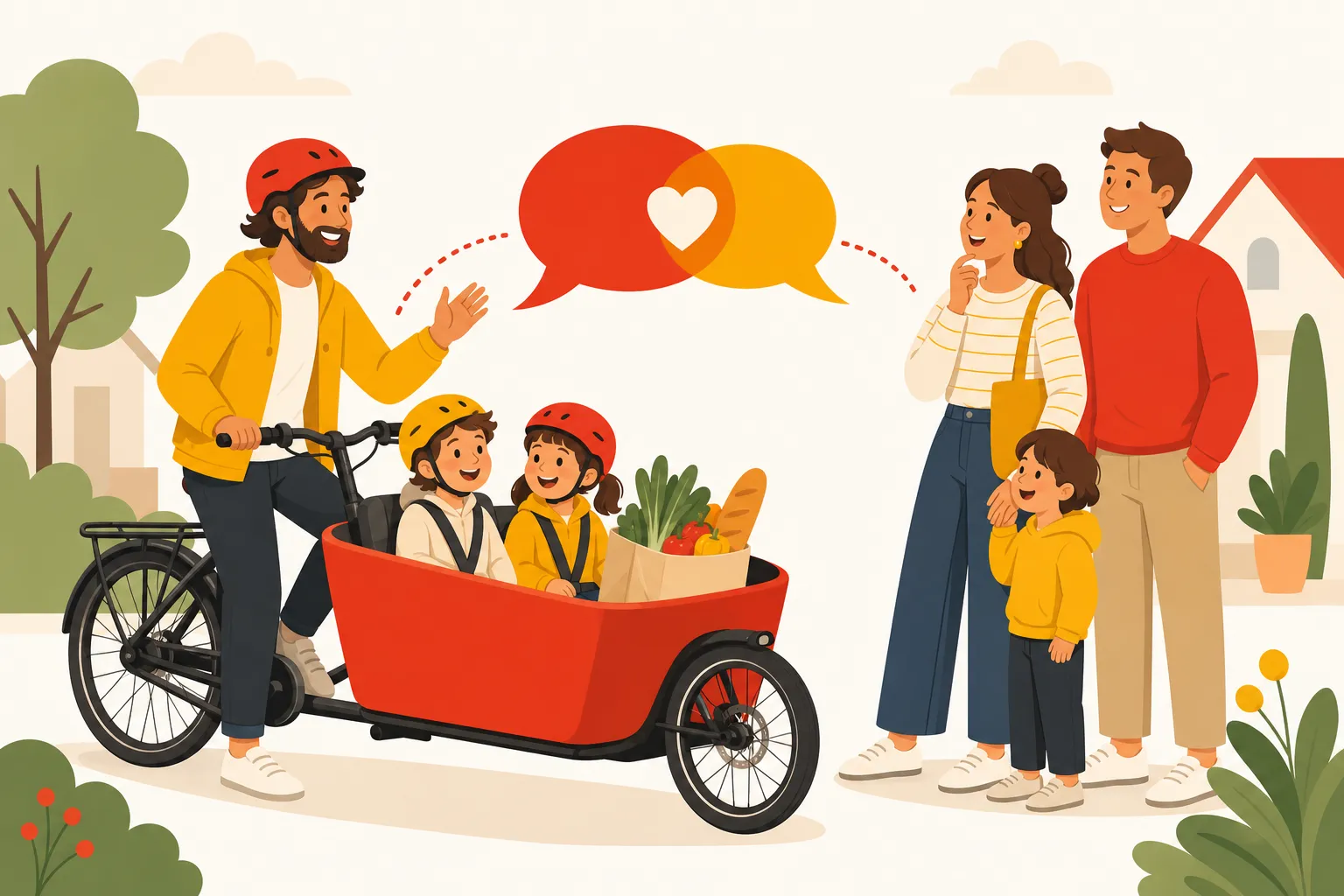
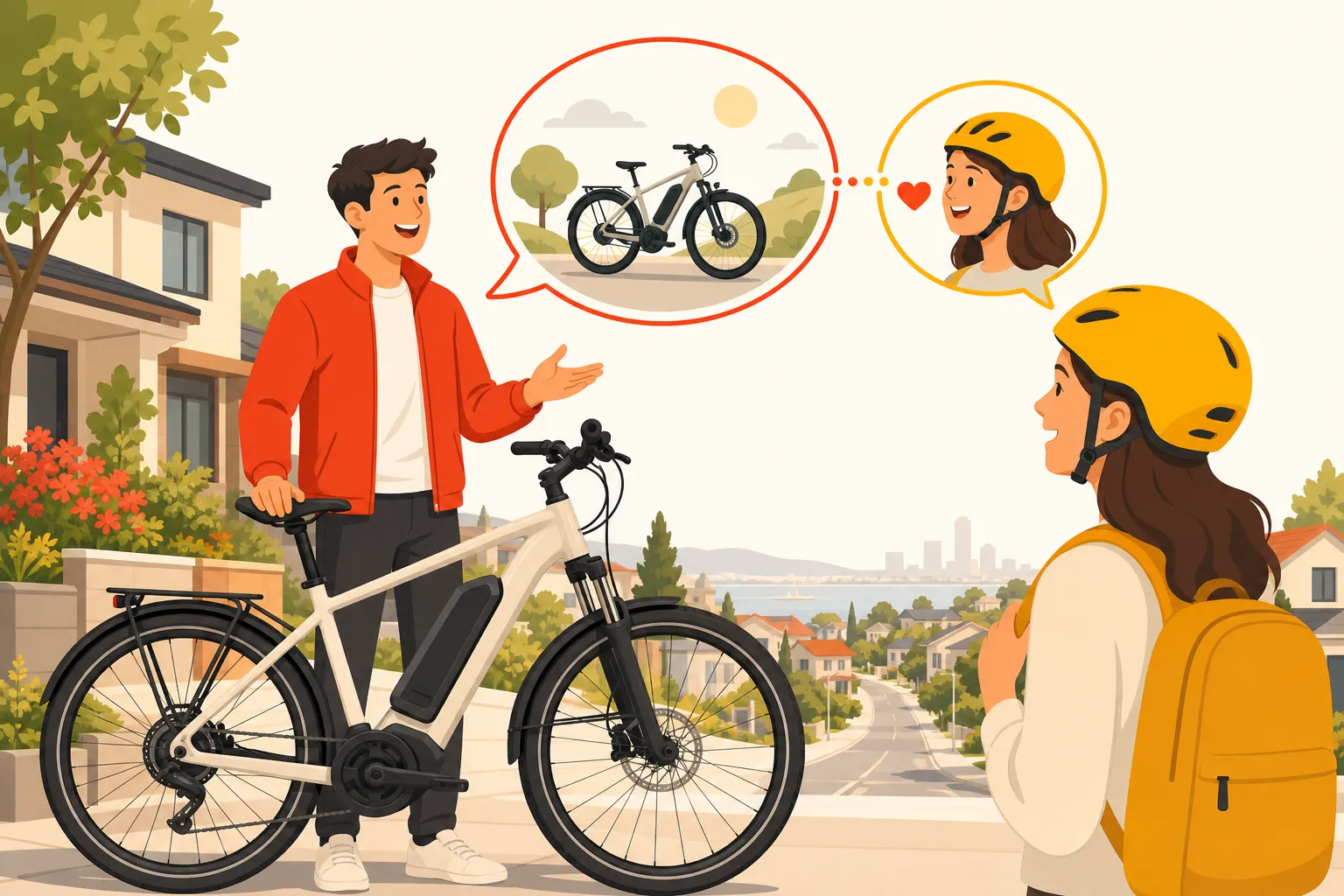
This is exactly the problem Stoked solves. It’s peer-to-peer brand advocacy software. It connects a prospective buyer with a real existing owner for a private 1:1 conversation (over SMS, email, or web chat) through a privacy proxy. Nobody’s personal contact info gets shared. A future buyer browses an interactive map of real owners on your site, finds someone nearby or someone with the same use case, and just… asks them questions. The conversation is the product.
You enroll your happiest 25 to 50 customers as advocates and reward them automatically (points or cash). Then you watch from a dashboard which conversations turn into sales.
The proof: Bunch Bikes, a premium cargo e-bike brand, drives roughly 40% of its sales through advocate conversations. Their daily admin time on the program dropped from 90 minutes to 20. About 90% of conversations are fully self-serve. Owners answer prospective buyers without the team lifting a finger. And the average time from a buyer’s first message to a real-world test ride is around six days.
That’s not a vanity metric. That’s a meaningful share of revenue coming from customers talking to customers.
Why does it work so well for e-bikes specifically? Because the purchase is high-consideration, high-anxiety, and geographically grounded. Buyers want local validation. They want to know it handles their hills, fits their life. An owner three towns over is infinitely more convincing than a five-star review from a stranger.
We made the full case for why this beats review widgets in why real conversations beat reviews for high-ticket DTC.
You can see how this works for bikes specifically on our e-bike vertical page.
Content That Actually Sells E-Bikes
Most e-bike content is product-glamour shots and spec lists. That’s the baseline, not differentiation. The content that moves buyers is content that answers the anxiety.
A few formats that consistently work:
- Use-case stories. Not “our bike has a 750W motor.” Instead: “How Maria sold her second car and now does the school run on a cargo bike.” Specific people, specific lives.
- Honest long-term reviews. Show the bike after 1,000 miles. Address the wear, the maintenance, the things that surprised owners. Honesty builds more trust than polish.
- The “will it work for me?” library. Build content around the real questions buyers ask: hills, range in cold weather, hauling capacity, apartment storage, theft. Each one is a buyer-intent search query and a conversion driver.
- Service and repairability content. A huge unspoken fear with e-bikes is “what happens when it breaks?” Brands that address this openly close more high-ticket sales.
And the highest-impact content isn’t content you make at all. It’s the real conversations your owners have with buyers. Those answer the exact question on a specific buyer’s mind, in their words, about their situation. You can’t script that, and you can’t fake it.
Reduce Returns: The Marketing Lever Founders Ignore
Here’s a number that should keep you up at night: a returned $2,500 e-bike doesn’t just cost you the sale. It costs you return shipping (these things are heavy and expensive to ship), restocking, potential damage, and the customer’s trust. A high return rate can quietly eat a premium bike brand alive.
Most returns on high-ticket products come from a mismatch between expectation and reality. The buyer thought it’d handle steeper hills. They didn’t realize how heavy it is to carry up stairs. The range fell short of what they imagined.
The fix is upstream. Better-informed buyers return less. Say a real owner tells a buyer honestly: “This is heavy. It’s a pain to bring inside. If you’re on a third floor walk-up, think hard about it.” That buyer either self-selects out (saving you a return) or buys with accurate expectations and keeps it.
This is the underrated business case for peer-to-peer advocacy. It’s not just a growth tool. It cuts returns too. The same honest conversation that closes the right buyer talks the wrong buyer out of an expensive mistake. That’s a win for everyone, including your margins.
Common E-Bike Marketing Mistakes
After watching this category up close, here are the traps founders fall into again and again.
Competing on price. If your whole pitch is “cheaper than the other guy,” there’s always a cheaper competitor with deeper pockets and bigger supply chains. Premium buyers aren’t shopping for cheapest. They’re shopping for right.
Over-relying on paid ads. Ad costs only go up. If your growth model assumes cheap, infinite paid acquisition, you’re building on sand. Diversify into channels that compound: content, SEO, and customer-driven word-of-mouth.
Treating reviews as enough. Reviews are one-directional. A buyer with a specific question (“will this fit a 6’4” rider?”) can’t get an answer from a star rating. Reviews build baseline credibility; they don’t close anxious high-ticket buyers.
Ignoring your existing customers. You probably have hundreds of delighted owners who’d happily evangelize, and you’ve never asked them. That’s leaving your best channel completely untapped.
Not measuring word-of-mouth. “Word-of-mouth is great but we can’t track it” is a cop-out. You can. If you’re systematizing advocacy, you can see which conversations drive sales and what each advocate is worth. We covered exactly how in five advocacy metrics that actually matter.
A 90-Day Founder Playbook
If you’re starting from scratch or resetting, here’s a concrete sequence.
Days 1–30: Positioning and foundation. Nail your one-sentence position. Identify your specific rider and use case. Audit your current channels: what’s actually driving qualified traffic versus burning cash. Build out your “will it work for me?” content library targeting buyer-intent keywords.
Days 31–60: Activate your owners. Identify your 25 to 50 happiest customers. Reach out and invite them into an advocate program. Set up a way for prospective buyers to actually reach them: a map and messaging system, not a vague “talk to a customer” form. Reward your advocates so the program is sustainable, not a favor you’re asking. This is where a tool like Stoked earns its keep, but the principle stands regardless of tooling: make it easy for buyers to talk to owners.
Days 61–90: Measure and optimize. Track which conversations and which content drive sales. Watch your return rate. Better-informed buyers should bring it down. Double down on the channels and advocates that produce, and cut the ones that don’t.
Then repeat. Marketing a high-ticket bike brand isn’t a launch. It’s a flywheel. Happy owners create informed buyers. Those buyers become happy owners who create more informed buyers.
The Bottom Line
E-bike marketing rewards trust over hype. Your buyers are spending real money on something they’ll live with for years, and they want proof from people like them, not louder ads.
Get your positioning sharp. Build a channel stack that doesn’t depend on ever-rising ad spend. Make content that answers real anxieties. And above all, turn your happiest owners into the marketing engine they’re dying to be. That’s the move that’s both the cheapest and the most convincing, and almost nobody does it systematically.
Want to see what peer-to-peer advocacy looks like for a bike brand like yours? Grab a demo and we’ll walk you through it.