How to Sell Tiny Houses Online
A tiny house is one of the most emotional, highest-stakes purchases a person will ever make online.
It’s not an impulse buy. It’s a home. Often a life decision wrapped inside a price tag that runs from $40,000 to well past $150,000. Nobody hits “add to cart” on that.
So when founders ask me how to sell tiny houses online, my first answer is uncomfortable: you don’t sell them online the way you sell anything else. You build enough trust online that someone is willing to wire you a down payment on a home they’ve never set foot in.
That’s the real job. Everything below is how you do it.
Start With Positioning, Not Ads
Most tiny house brands burn cash on traffic before they’ve answered the only question a buyer actually has: why you, and not the other forty builders?
The category is crowded and confusing. THOWs (tiny houses on wheels), park models, ADUs, container conversions, kit homes, fully custom builds. Buyers don’t know the vocabulary yet. And two matte-black-and-cedar builds look identical on Instagram.
Pick a wedge and own it. Vague positioning is the most expensive mistake in this category. The brands that win narrow hard:
- Use case: full-time off-grid living vs. a backyard rental income unit vs. a weekend cabin. Three completely different buyers. Different financing, different objections, different anxieties.
- Build philosophy: RVIA-certified and road-legal, or fixed-foundation and code-compliant for permanent placement. That choice decides whether your customer can legally park the thing where they live.
- Buyer identity: the climate-conscious downsizer, the priced-out millennial chasing a first home, the investor stacking ADUs for cash flow.
Sharp positioning makes every later decision cheaper. Your ad targeting tightens. Your content writes itself. Sales conversations stop being education marathons and start being confirmations.
If you can’t finish the sentence “We’re the tiny house company for people who __,” stop spending on ads until you can.
Get the Money Conversation Out in the Open
Here’s a hard truth specific to this category: financing kills more tiny house deals than price ever does.
Tiny homes occupy an ugly gap. They’re too expensive for most buyers to pay cash. But they often don’t qualify for a traditional mortgage either, because they’re not classified as real property. RV loans, personal loans, and a handful of specialty lenders fill the void. Most buyers have no idea any of this exists when they land on your site.
If they discover the financing problem on their own, late in the process, they walk.
So put it up front:
- A dedicated, plain-language financing page that explains the real options for THOWs vs. foundation builds.
- Named lender partners and rough rate ranges, not a vague “financing available” badge.
- A simple monthly-payment framing next to the sticker price. “$85,000” feels impossible. “About $640/month, less than your rent” reframes the entire decision.
This is also where land, zoning, and parking belong. Where can they legally put it? What does delivery cost? Can it survive their climate? Surface the hard logistics early. Buyers who get blindsided by zoning at the contract stage don’t just cancel. They tell everyone in their tiny house Facebook group why.
Choose Channels That Match a Long Decision
Tiny house buyers don’t convert in a session. They convert over three to nine months of research, saving, and second-guessing. Your channel mix has to survive that timeline, not interrupt it.
Search and YouTube are your foundation
People researching tiny homes are searching constantly: “can you finance a tiny house,” “tiny house zoning laws by state,” “off-grid tiny house cost.” That’s high-intent, low-competition, evergreen demand. Own it with genuinely useful content and you capture buyers years before they’re ready.
YouTube deserves outsized attention here. Tiny house tours are one of the most-watched home categories on the platform. Full walkthroughs, build timelines, and “one year living in it” follow-ups do the heavy lifting a product page never can. Video is the closest thing to a walkthrough you can deliver at scale.
Social shows the dream; email closes it
Instagram, TikTok, and Pinterest sell the aspiration. They’re discovery and desire, not conversion. Don’t measure them by direct sales.
Email is where the long sales cycle actually plays out. Capture interest early, then nurture for months: build process, customer stories, financing explainers, model releases. The buyer who isn’t ready in March is ready in September. Email is the only channel cheap and patient enough to still be there.
Paid is for retargeting, not cold acquisition
Cold paid traffic on a $90,000 product rarely pencils out. Retargeting site visitors and warming up your email list does. Spend where you already have a relationship.
For more on escaping the cold-acquisition treadmill, see how to lower customer acquisition cost for high-ticket DTC.
Content That Removes Fear, Not Content That Sells
Most tiny house content tries to make people want the home. That’s the easy part. Pinterest already did it.
The hard part is making people stop being afraid to buy one. Great content in this category is reassurance disguised as information:
- Build transparency: show the framing, the insulation, the electrical, the certifications. Hidden process reads as hidden corners cut.
- The unglamorous logistics: delivery, setup, utility hookups. What happens when something breaks two years in.
- Honest tradeoffs: composting toilets, loft ceilings, storage limits, winter living. Buyers already fear these. Naming them first builds more trust than any glossy render.
- Real ownership over time: not the launch-day photo, but month fourteen. The leak they fixed. The customization they’d redo.
That last one is the most persuasive content you’ll ever publish. You can’t write it yourself. It has to come from the people who already live in your homes.
Your Best Salesperson Already Owns One
Here’s the pattern I’ve watched play out across every high-consideration category: the most powerful thing in your funnel is an existing customer who’s thrilled.
Not a five-star review. Not a testimonial quote on a landing page. An actual owner the buyer can talk to.
Think about how this purchase really happens. A prospective buyer has been lurking in tiny house forums for months. They don’t fully trust your marketing, because it’s marketing. What they want is to find someone who already bought from you and ask the unfiltered questions: Was it worth it? Did they hit you with hidden costs? How’s it hold up in winter? Would you do it again?
Right now that conversation is happening anyway, in Facebook groups and Reddit threads, completely outside your control. The brands that win are the ones that bring it onto their own turf.
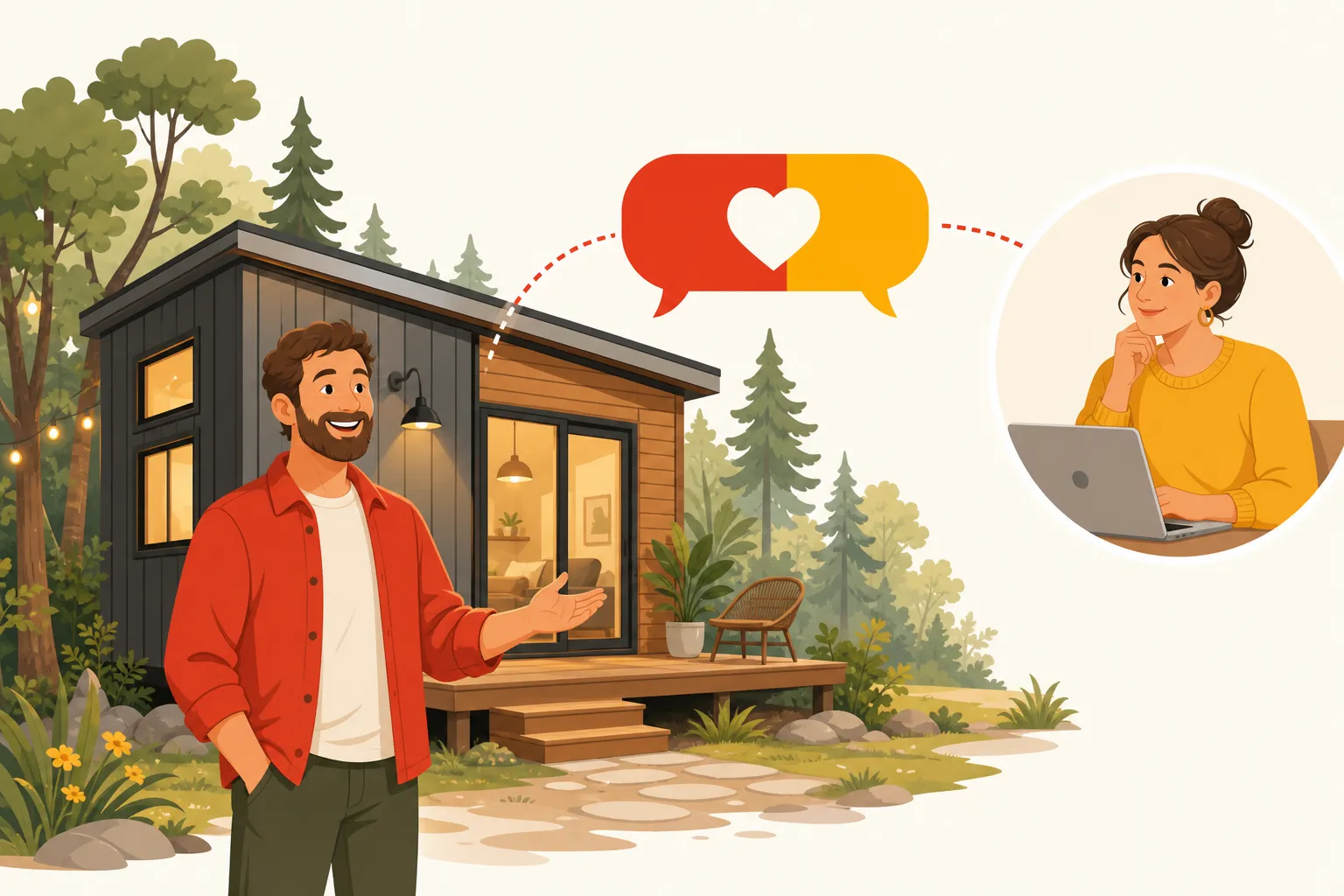
This is exactly the gap Stoked was built to close. You enroll a handful of your happiest owners as advocates. Prospective buyers browse an interactive map on your own site to find a real owner near them. They start a private one-to-one conversation over SMS, email, or web chat. No personal contact info is shared. Everything runs through a privacy proxy, and you reward advocates automatically.
The conversation is the product. Reviews are one-directional and can’t answer “will this survive a Montana winter on my exact lot?” A real owner can. That’s the difference between social proof you read and social proof you can interrogate.
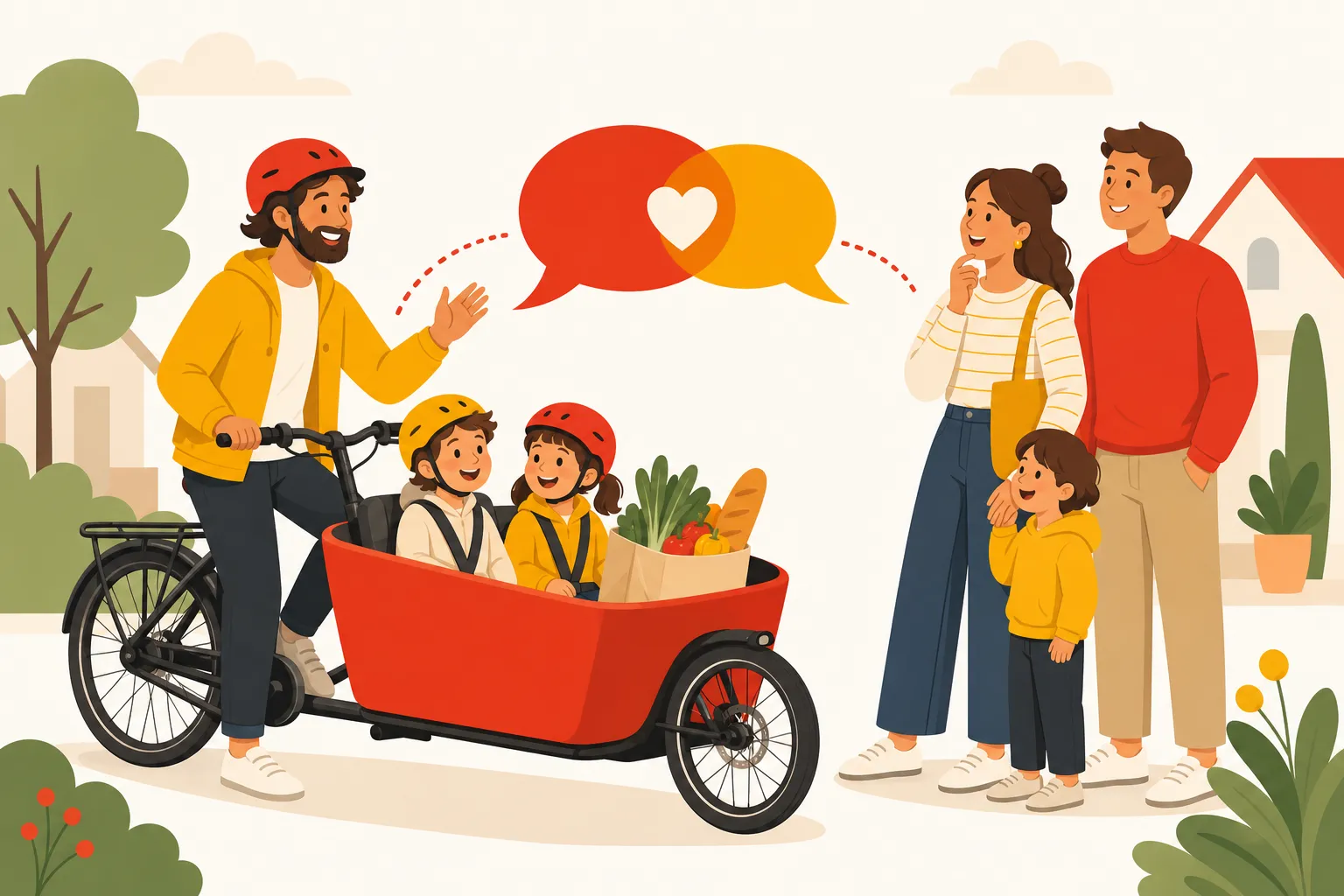
We’ve watched this work in an adjacent high-ticket category. Bunch Bikes, a premium cargo e-bike brand, attributes 40% of sales to advocate conversations. About 90% of those conversations are fully self-serve between owner and buyer. That dropped the founder’s daily admin time from 90 minutes to 20. Their typical buyer goes from first message to test ride in around six days.
A tiny house is a far bigger commitment than a cargo bike. The trust gap is even wider, so peer conversation matters even more. You only need 25 to 50 genuinely happy owners to start. You almost certainly already have them. You just haven’t given buyers a way to reach them.
I’ve written more on why real conversations beat reviews for high-ticket DTC if you want the longer argument.
Word-of-Mouth Is the Channel, Not a Byproduct
Tiny house buyers trust other tiny house owners more than they’ll ever trust a brand. That’s not a marketing inconvenience, it’s your biggest opportunity.
The mistake is treating word-of-mouth marketing as something that just happens when the product is good. In a category this emotional, you can build it on purpose:
- Make owners easy to find. Put them on a map. Let buyers self-select the owner whose situation mirrors their own.
- Reward advocacy honestly. Points, cash, or experiences for the owners carrying the program. Compensation that’s transparent reads as gratitude, not bribery.
- Capture the stories. Every great owner conversation is content, a referral, and a future testimonial all at once.
Done right, your customer base becomes a source of trust that compounds as you grow, not a one-time transaction that ends at delivery.
Reduce Returns and Regret Before They Happen
You can’t ship a tiny house back. But buyer’s remorse on a five-figure purchase is its own kind of return. It shows up as canceled deposits, financing fallout, and brutal public reviews.
The fix is the same lever that drives sales: honest, specific expectation-setting before the deposit.
- Let buyers talk to owners who’ll tell them the unvarnished truth. A prospect who walks away after an honest conversation was never going to be a happy customer. You just dodged a refund, a chargeback, and a one-star story.
- Use a detailed spec and customization process so nobody imagines features they’re not getting.
- Document the post-delivery reality: maintenance, warranty, what ongoing ownership actually demands.
A buyer who knows exactly what they’re getting is a buyer who keeps it, refers it, and becomes your next advocate.
The Common Mistakes
After watching this category, the same unforced errors come up again and again:
- Selling square footage instead of a life. Nobody wants 240 square feet. They want freedom, low costs, less stuff, a smaller footprint. Sell that.
- Hiding the price. “Contact for pricing” on a website signals you’re either expensive or inconsistent. Buyers researching for months will simply skip you for a builder who’s upfront.
- Ignoring the post-purchase logistics. Delivery, placement, and zoning anxiety kill deals at the finish line. Address them before the buyer has to ask.
- Treating it like an e-commerce funnel. Optimizing for same-session conversion on a home is malpractice. Optimize for trust accumulated over months.
- Letting customers be silent. Your happiest owners are your most underused asset. Every month they’re not talking to your prospects is a month of sales you’re leaving in the forum.
The Real Playbook
Selling tiny houses online comes down to one principle: shrink the gap between how much trust the purchase requires and how much trust you can deliver before someone commits.
Sharp positioning, honest financing, patient content, and search and video all narrow that gap. But the fastest way to close it is the oldest one: let a real, happy owner talk a nervous buyer through it. Owner to buyer. No script.
That’s a system you can build on purpose. If you want to see what it looks like running on your own site, book a quick demo and I’ll walk you through it.
And if measurement is on your mind, here’s how to measure advocacy impact with five metrics that actually matter, so you can prove it’s working instead of hoping it is.